What Australian Property Owners Must Learn About Garage Door Screening
A garage door is very easy to neglect when it is opening and shutting as expected. It is likewise one of those components of a house that can silently go from history noise to significant responsibility if it has not been tested, serviced, or inspected versus the ideal standard. For lots of Australian house owners, the trouble is not that the door looks damaged. It is that the door is carrying years of wear, weather direct exposure, and mechanical tension that are not apparent up until something fails.
That issues anywhere, however it matters especially in cyclone-prone components of Queensland, where garage door efficiency can influence how the entire home stands up to severe wind. A door that loses honesty can let stress in, and as soon as that occurs the damages can relocate swiftly via wall surfaces, ceilings, roof cladding, and contents. It can additionally produce dangerous wind-borne particles. That is not a theoretical problem, it is just one of the factors wind-rated garage doors became such a significant component of the building conversation after Cyclones Larry and Yasi.
For home owners, garage door testing is not practically whether a remote works or an electric motor makes noise. It has to do with whether the door still fulfills the work it was designed to do, whether it still straightens with garage door criteria, and whether the remainder of the system, from springs and wires to opener and correctings, is still risk-free and serviceable.
Why garage door screening is worthy of even more focus than it gets
Most individuals think of garage door issues as trouble first. The door sticks, the opener hesitates, one panel looks worn out, or the remote has shed array. Those are the visible signs. The more vital inquiries are beneath them: is the door well balanced, is the wind score still suitable for the area, is the opener working in sync with the door, and has corrosion or use started to damage parts that are difficult to examine casually?
In useful terms, garage door screening is a means of capturing the sluggish drift from "great" to "borderline" before it becomes a failure. An expert assessment considers the door as a system, not a single part. That includes the motion of the door, the condition of relocating parts, the state of the opener, and whether the setup still makes good sense for the home and its exposure.
There is likewise a guarantee angle that property owners forget. Some suppliers tie guarantee coverage to servicing intervals. If a door or opener is expected to be serviced within a particular period, missing that solution can have effects later if an electric motor or various other component falls short. So testing is not just a safety and security practice. It can likewise safeguard the value of what you have actually currently paid for.
Standards, regulations, and what "certified" actually means
Garage door criteria in Australia being in a somewhat complicated room for lots of homeowners since not every standard is instantly law. Criteria Australia keeps in mind that Australian Standards are voluntary unless they are referenced by regulation, and once they are referenced, they can come to be required in the pertinent context. That distinction matters.
In Queensland, the structure for building and conformity is secured in the National Building And Construction Code, the Queensland Advancement Code, the Building Act 1975 and the Building Guideline 2021. In cyclone-prone locations, garage doors installed considering that 2012 must meet the wind-rated standard AS/NZS 4505. Older doors might not have enough stamina for cyclonic winds, even if they appear serviceable on a common day.
That is where australian compliance for garage doors comes to be greater than a paperwork exercise. Compliance is not about a label that looks assuring from the driveway. It has to do with whether the door was created, installed, and kept to fit the wind region and the structure conditions it encounters. A house owner can possess a perfectly attractive garage door that is still not proper for its location.
There is a typical catch here. Individuals assume that due to the fact that a door opens and closes smoothly, it is certified. Smooth activity tells you very little about wind resistance. A door can be mechanically practical and still not be the appropriate door for a cyclone-prone site. Examining demands to account for both the everyday and the extreme.
What a correct test is trying to find
A high quality garage door test should determine whether the door is risk-free, safe, and performing within anticipated limitations. In genuine homes, that suggests looking for greater than obvious breakage. It suggests looking for indicators that the system is tiring.
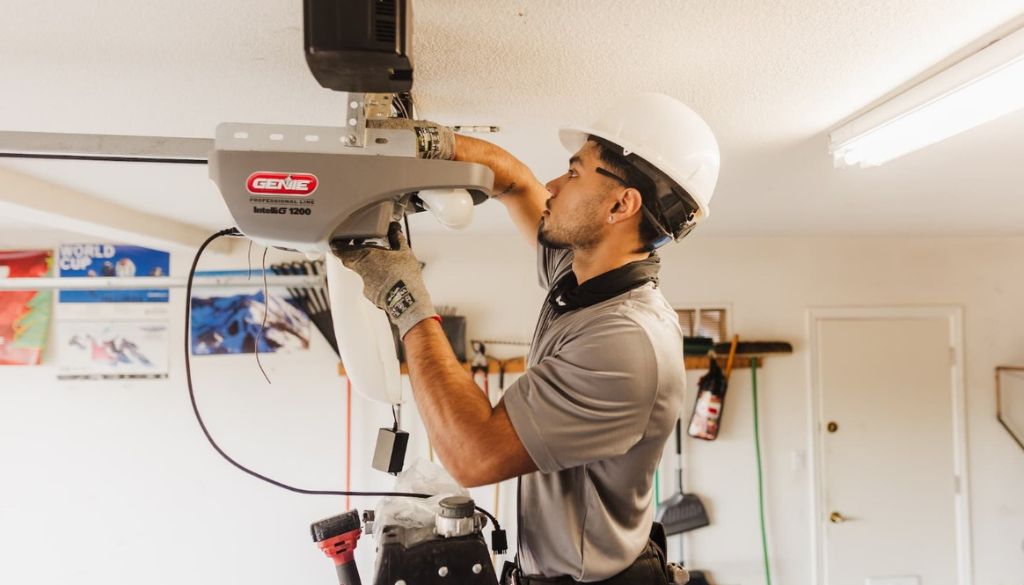
A belt-drive opener service technician will typically be expecting irregular activity, uncommon sound, binding, corrosion, damaged seals, worn relocating parts, and any kind of indicator that the opener is having a hard time to lift or take a trip correctly. They may likewise inspect whether the opener has come to be disconnected from the door, due to the fact that an easy disconnect can look like a major fault if no one has actually inspected the fundamentals first.
Some problems are small, and some are not. A reduced remote battery can make a house owner assume the opener has stopped working. A detached opener can produce the exact same impression. Those are simple when determined. A fatigued spring or worn cable is not. Those parts lug major energy, and mishandling them is not a do it yourself job. This is one of the reasons makers encourage qualified professionals to handle repairs and servicing.
Testing likewise matters because it reveals whether a door is still suitable for the climate around it. In seaside locations, for example, corrosion tends to sneak into equipment and fasteners faster than owners expect. A door can stay functional while its long-lasting resilience silently drops. That is why routine expert servicing is not simply for doors that have currently developed problems.
The Queensland angle, where wind ranking transforms the conversation
If a home remains in a cyclone-prone component of Queensland, garage door testing enters into broader house durability. Queensland Government guidance claims garage doors mounted in impacted locations considering that 2012 should satisfy the wind-rated criterion, AS/NZS 4505. The exact same guidance also makes clear why this matters. Garage door failure can result in major damage to the home itself and can turn components of the building right into hazardous debris.
That is a strong reason to treat the garage door as a structural worry, not simply a relocating panel. For property owners in these locations, a test must ask a blunt question: does the door still fit the wind environment it lives in?
For older buildings, the answer is not constantly yes. A door might have served under older assumptions, yet later on demands and existing danger understanding can be much more requiring. If a house has had enhancements, substitute parts, or an adjustment of opener with time, the problem of the whole assembly must be evaluated by a person who comprehends just how the door, the building, and the regional wind region interact.
This is where several homeowners discover that substitute makes more sense than repeated repair work. If the door is old, corroded, or just not wind-rated for the site, investing money on patchwork fixes can be false economic climate. The door might keep working, yet that does deficient adequate.
Service intervals and what they imply in practice
Manufacturers are often a lot more particular than owners become aware concerning maintenance. B&D claims a few of its domestic garage doors and openers, when bought together, can bring a 10-year Total Confidence Service Warranty, however only if serviced within the first twelve month and afterwards a minimum of every 2 years. Gliderol says panel doors must be oiled every 3 to 6 months and serviced every 2 years, with even more frequent attention for coastal homes. It also notes that stopping working to comply with authorised servicing intervals might impact warranty insurance coverage, particularly for motorised components.
Those periods are useful due to the fact that they mirror exactly how these systems age in the real world. A garage door is not a fixed object. Springs shed some tension gradually, rollers wear, hardware loosens, and motors gather usage. Coastal air, heat, and dust all accelerate the procedure in their very own way.
A great rule is to deal with the manufacturer's service routine as the floor, not the ceiling. If the property is subjected to salt air, hefty day-to-day use, or repeated extreme climate, the door might need focus faster. The factor is not to over-service whatever. The point is to stop thinking that "not broken yet" means "no upkeep required."
When homeowners must stop fixing and call a professional
There is a practical happy medium in between neglecting an issue and hurrying to replace the entire door. Some problems are safe enough to inspect yourself, offered you remain within fundamental limits. A dead remote battery is one instance. A door that is not coupled with the opener broken garage door spring correctly, or an opener that has actually become detached from the door, is another.
But the minute the issue relocates into springs, cables, track positioning, unusual resistance, or a door that has actually come to be unstable or uneven, the best action is to quit. Those components are under tension, and garage doors keep adequate force to harm a person who treats them casually. That is exactly the type of task trained professionals exist for.
This distinction is very important because people typically require commercial garage door repairs only after an industrial door has actually currently fallen short hard, but the same reasoning applies to homes. If a door has actually been making grinding noises for weeks, stumbling, or dropping in a different way on one side, that is not a "wait and see" problem. It is a call for an appropriate assessment.
A useful homeowner can capture the early indications, however not every issue ought to be solved with a screwdriver and decision. Recognizing where that line sits becomes part of good ownership.
Repair or change, a choice that should be based upon more than cost
Repairing a garage door can be the right decision when the concern is separated. A used opener part, an unsuccessful remote, a damaged sensing unit, or a functional equipment concern may not justify a full substitute. But repair service makes less sense when the door is outdated, not wind-rated for the location, influenced by rust, or repeatedly failing.
The best choice often comes down to 3 questions. Is the door risk-free? Is it compliant for the site? Is it cost-efficient to maintain repairing it?
If the solution to the first concern is uncertain, the door requires focus before anything else. If the answer to the second is no, after that a fixing may only postpone a bigger concern. If the solution to the 3rd is no, replacement can be the smarter invest also when the old door is still practically moving.
Homeowners in Queensland, particularly in coastal or cyclone-exposed areas, should pay specific interest to this trade-off. A replacement that brings the garage door up to existing wind expectations can be an extra practical long-term move than squeezing an additional year or 2 out of a system that has currently dropped behind.
What a homeowner can seek in between expert services
You do not need to take the door apart to keep an eye on it. A few easy monitorings, done on a regular basis, can inform you a whole lot regarding exactly how the system is behaving. Maintain it short and practical.
- Watch whether the door relocates equally and without jerking.
- Listen for brand-new scuffing, banging, or grinding sounds.
- Check whether the opener reacts constantly, particularly after a power interruption.
- Notice any noticeable corrosion, loosened hardware, or damaged panels.
- Pay focus if the door starts to really feel slower, larger, or much less dependable than before.
Those observations are not an alternative to servicing, yet they help capture change early. Adjustment is usually where the genuine story begins.
Security, insulation, and the day-to-day advantages of a better-tuned door
Testing is often discussed in terms of safety and conformity, which is reasonable, yet homeowners likewise obtain everyday take advantage of a properly maintained door. A door that secures effectively is generally a lot more efficient at keeping the garage comfortable and limiting the invasion of dust, wind, and insects. A door that closes easily is likewise much less most likely to produce safety weak points.
Openers have changed as well. Some models now consist of helpful functions such as solution indicator lights, which can take a few of the guesswork out of maintenance timing. B&D notes that some of its openers consist of that type of indication. For house owners, that is useful since it transforms maintenance right into a prompt instead of an obscure memory.
There is likewise the straightforward issue of comfort. An effectively evaluated and maintained door has a tendency to really feel much better to utilize. It does not shudder, drag, or make the entire room seem like machinery. That might sound small, yet it is often the first sign that the system remains in excellent shape.
The most practical means to think of garage door testing
The finest way to think about garage door testing is as a necessary check on a moving part of your home that can influence safety and security, weather strength, service warranty insurance coverage, and day-to-day dependability simultaneously. For some homes, the concern is standard wear. For others, particularly in Queensland's cyclone-prone areas, the issue is whether the door still pleases wind-rated assumptions under AS/NZS 4505 and the wider australian compliance for garage doors framework.
That is why the exact same garage door can be "fine" for years and still be entitled to a more detailed look. Residence modification, weather takes its toll, and standards do not stall. A door that served when it was new may not be the ideal solution currently, especially if it predates current wind-rating needs or has actually had years of coast direct exposure and spot repairs.
The practical method is neither anxiety nor complacency. It is routine testing, practical servicing, and a desire to change a door when the realities direct in this way. For most home owners, that indicates keeping an eye on the noticeable signs, scheduling expert maintenance on schedule, and treating the garage door as part of your home's defensive covering, not just things that hides the car.